














From a prop-trading idea to credit infrastructure any DeFi market can plug into.
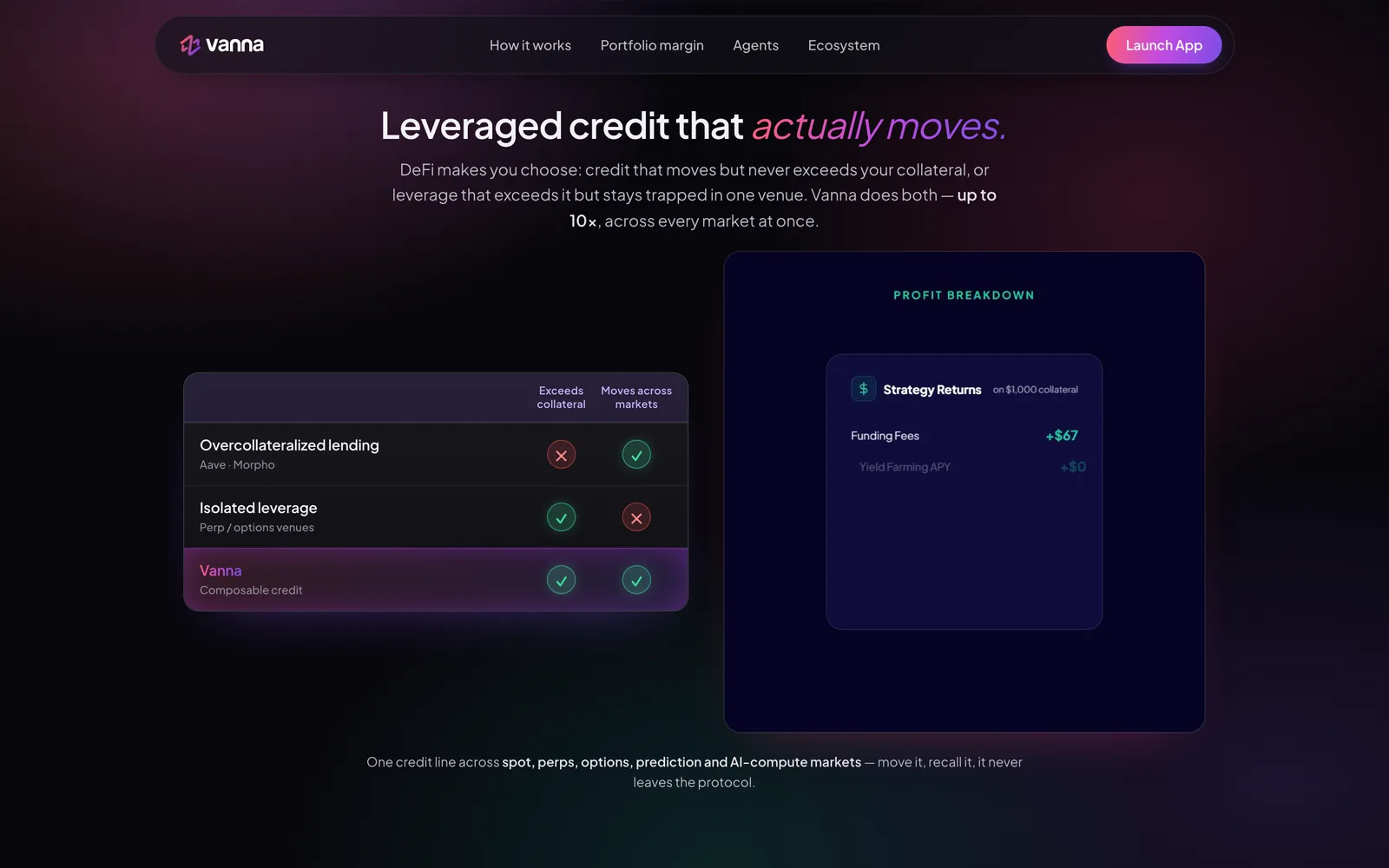
Vanna began in November 2023 as a prop-trading protocol: lenders would fund traders who had the skill but not the capital. Building it, testing it with early users and taking it to investors and trading firms showed us the real gap sat underneath the trade. On-chain credit is either overcollateralised, returning less than you post, or trapped in the venue that issued it, so a hedge on one venue cannot support a position on another and most capital sits idle as excess margin. Prime brokers solved this decades ago by financing a client’s whole book from one account. Rebuilding that on-chain is first a risk problem: credit that exceeds collateral and moves across markets is only safe if the engine can see, price and close every position it has financed. With my cofounder I worked out that model, and I shaped the product around it: how traders, businesses, institutions and agents reach the same credit, and how each of them sees the risk before they act.
When the same collateral can back positions in many markets, more of it is put to work, which adds liquidity and volume across DeFi. The current protocol runs on Stellar and Solana and is being prepared for a limited mainnet launch.


Outcomes of my work
- Built on seven chains: Arbitrum, Base, Optimism, BNB Chain, HyperEVM, Stellar and Solana
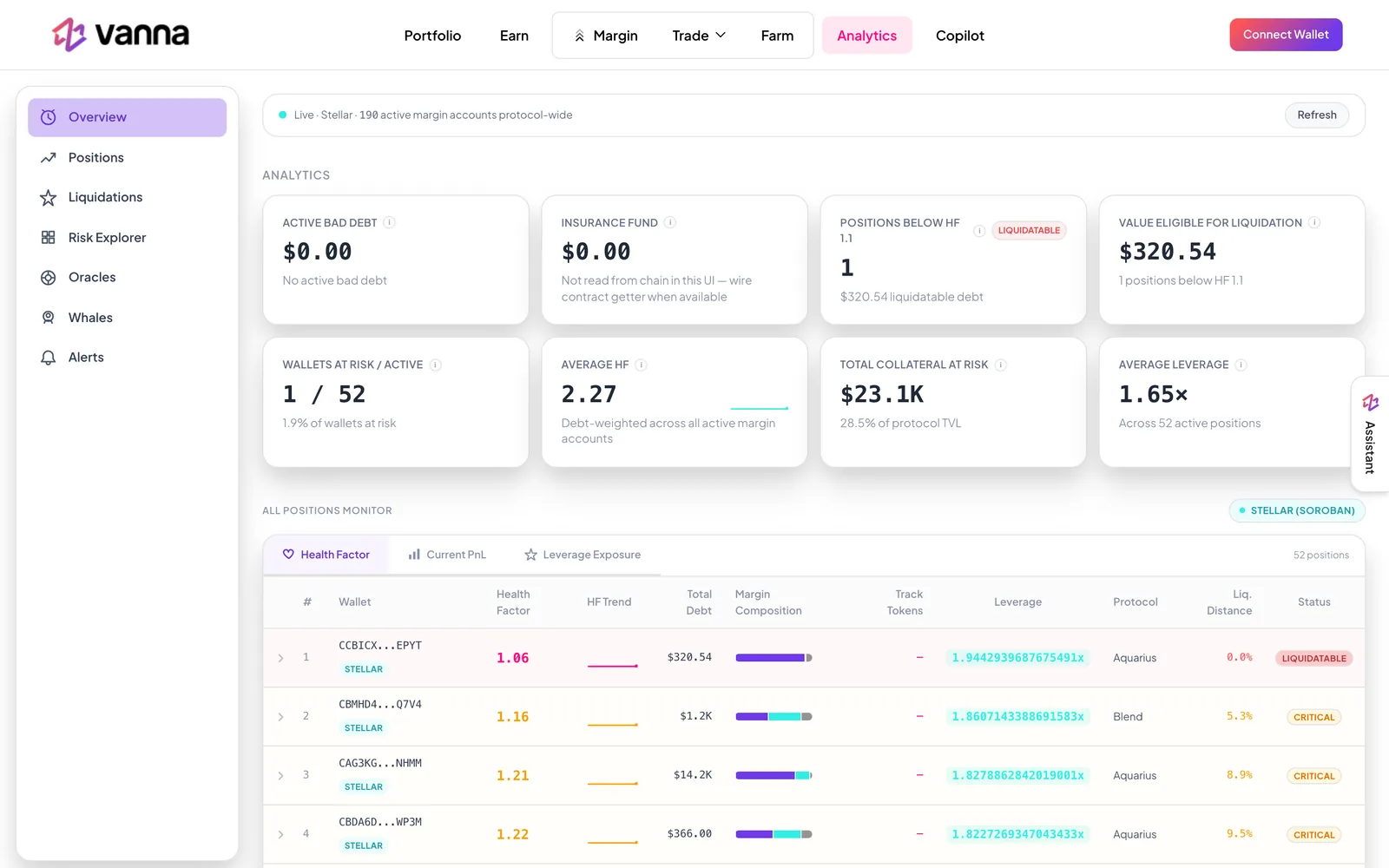
- A closed alpha of 130+ test wallets and 99 margin accounts, with structured feedback into the build
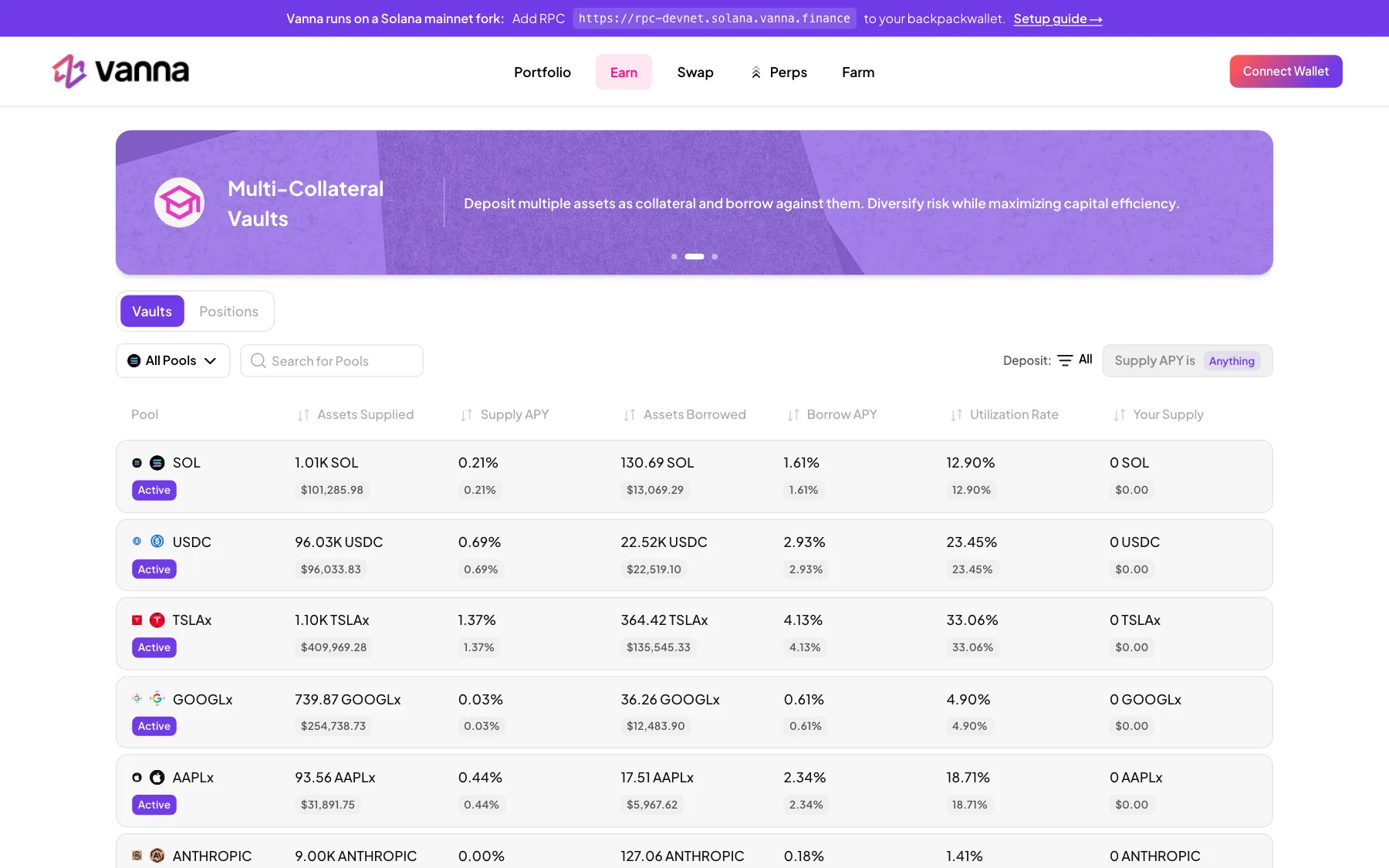
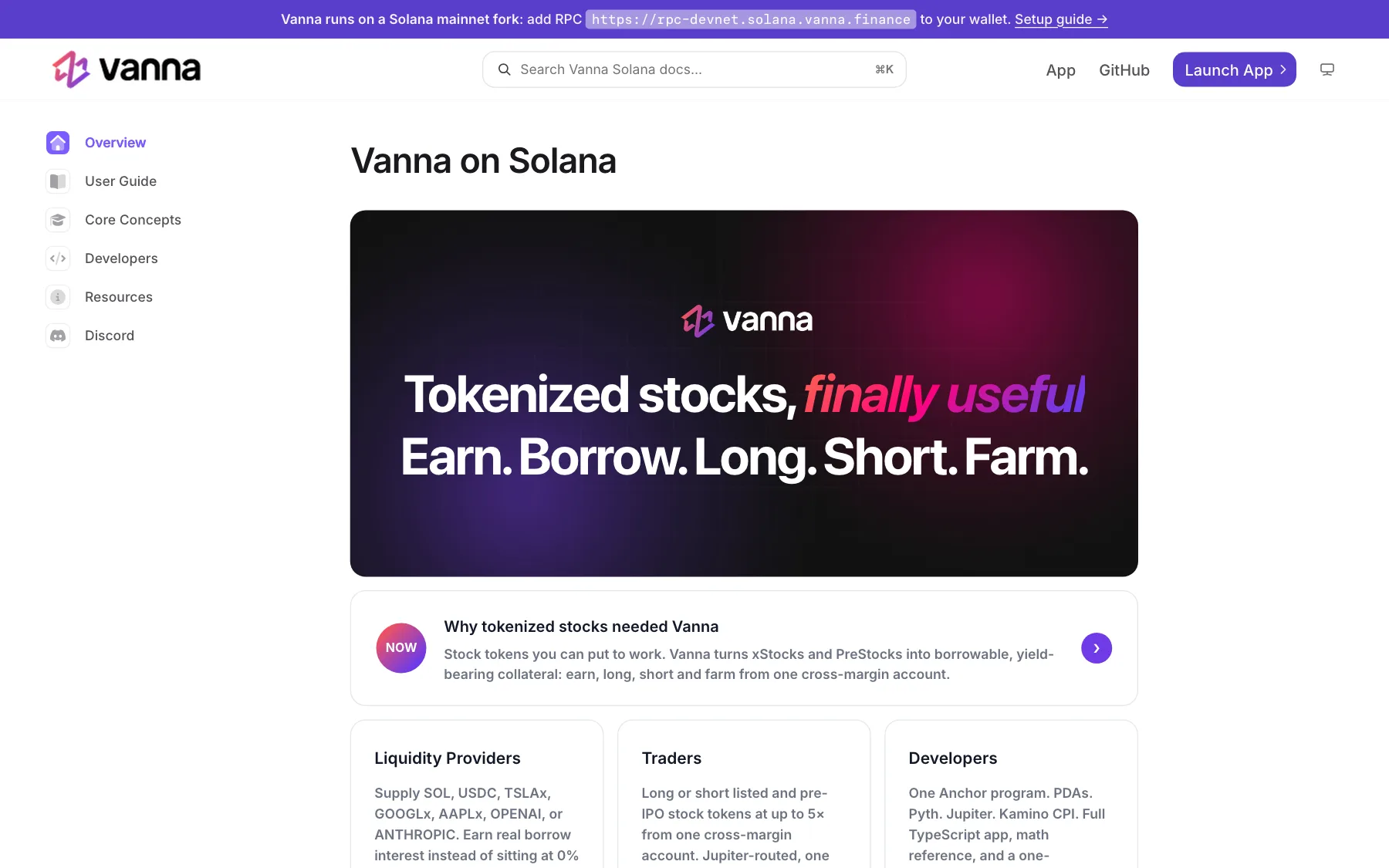
- Tokenised stocks and pre-IPO tokens made borrowable on Solana
- An internal economic-risk assessment of the credit model, produced with my cofounder
- Hired and led the AI/ML engineers who build the agent layer
- 20+ ecosystem partnerships across chains and protocols
What I built with and worked with
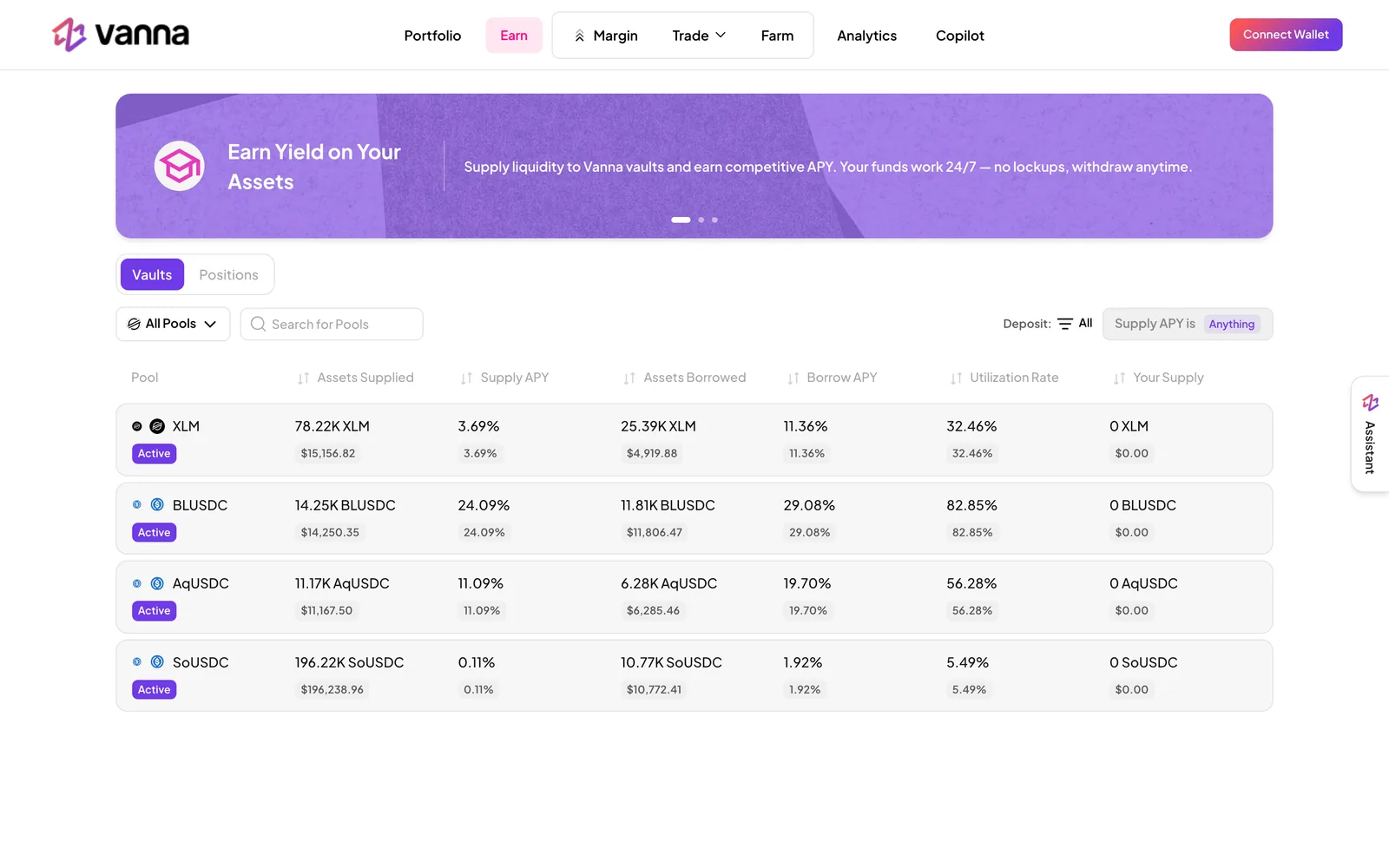
- Stellar: Blend, Aquarius, Soroswap, Reflector
- Solana: Kamino, Jupiter, Pyth, xStocks
- EVM: Uniswap, Avantis, MUX, Perp, Derive
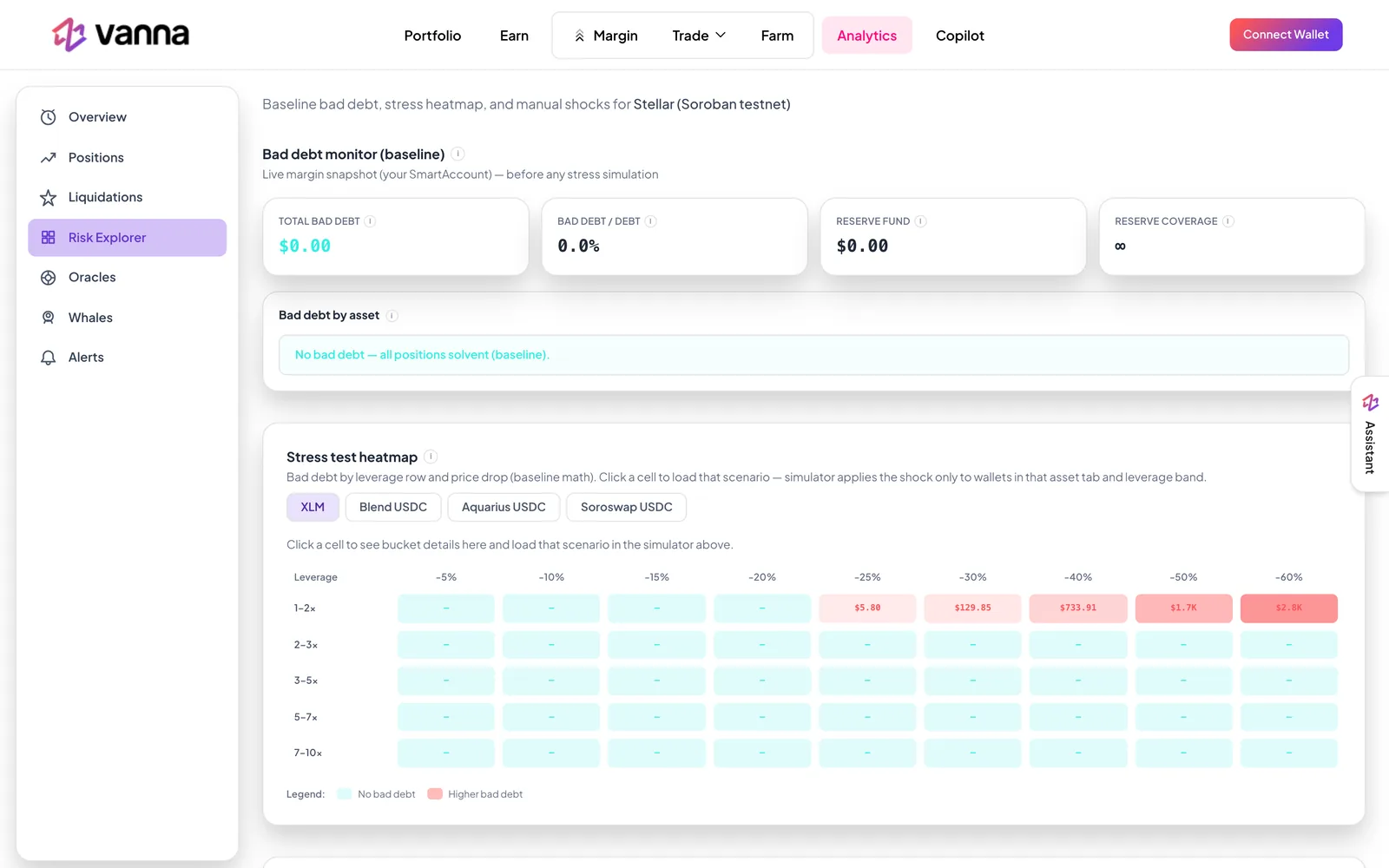
- Risk: GARCH stress simulations, opening and liquidation thresholds, TWAP oracle marking
- Agents: Model Context Protocol, intent-based Copilot, accounts with hard limits
- Tools: Figma, Claude Design, Claude Code
What I owned
led co-authored others
- DiscoveryTraders, trading firms and investors
- StrategyFrom prop trading to credit infrastructure
- UX / UIPro and Lite modes; health factor in every flow
- Risk & controlsCredit model and thresholds, with my cofounder
- EngineeringCofounder’s protocol team builds to spec
- Site & docsSite and docs for users, builders and agents
- Go-to-marketEcosystem partners across chains and protocols
- AI & agentsAgent architecture and the AI/ML hires
Changed the product after listening to traders, trading firms and investors.
- Early users, investors and trading firms kept filing the first version as another perp DEX; the value was the credit underneath
- Trading firms named what they miss on-chain: cross-venue margin, one risk number, segregated accounts with enforced mandates
- Wallets were embedding perps: whoever owns distribution wants leverage inside their own product
- The insight that reorganised the roadmap: a credit protocol’s biggest users may never see its front end
Mapped where on-chain credit breaks.
- Money markets lend below collateral: roughly $150 locked to borrow $100
- Perp venues give exposure above collateral, but the margin stays in one venue and one pair
- Gearbox’s credit accounts admitted only positions a venue already tokenised, so a perp never entered the risk model
- DeltaPrime attempted cross-market credit and stalled; the portfolio margin I found sits inside single venues
- No live protocol I found offers credit that both exceeds collateral and moves across markets
Designed the credit model.
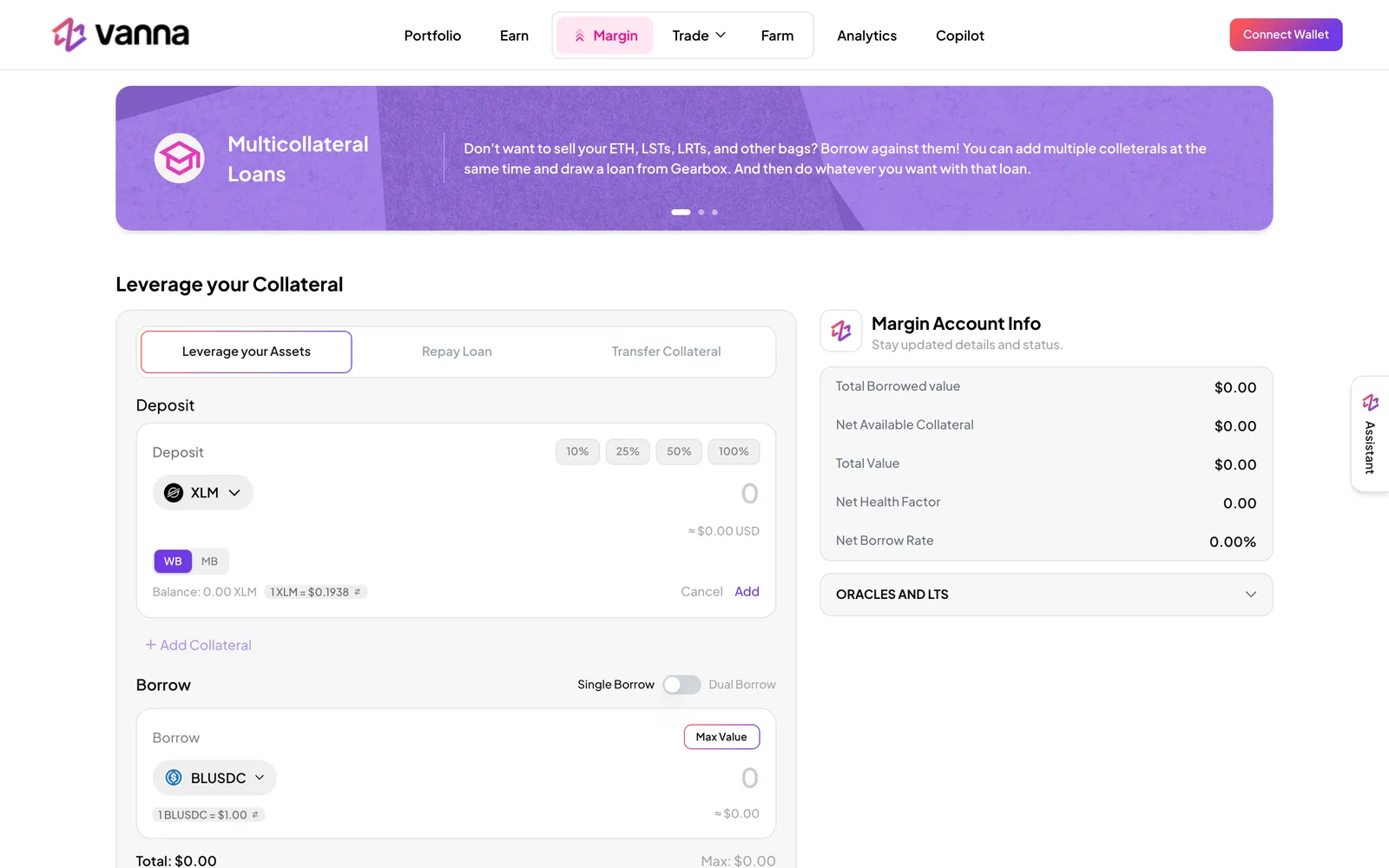
- One margin account holds the whole book, with one health factor across every position
- Credit can be deployed only into allow-listed venues, never withdrawn to a wallet
- A tracking token marks each external position into the health factor on every price update
- Positions open at up to about 5× today, 10× being the design target; an account can open only with a health factor above 1.25 and is liquidated at 1.10; the borrowing rate rises as a pool fills
- Walked away from two integrated venues whose positions the engine could not mark
- Tokenomics and a revenue-first model with my cofounder; no token before product-market fit
Made leverage easier to understand and safer to use.
- The health factor is shown in every flow and before every trade
- Pro mode for manual multi-leg control; Lite mode turns deposit, borrow and deploy into one click
- Signature friction was killing leverage adoption, so collateral and borrow execute in one transaction
- A public risk dashboard for positions, liquidations and oracles
- A Risk Guardian designed to act under the user’s own policy before the 1.10 line, without taking custody
Designed the same credit for businesses and agents.
- Leverage as a service: a wallet or exchange would offer credit to its users while Vanna runs the risk engine
- The agent architecture I defined: the AI plans each action; deterministic code and contracts execute it
- An MCP server whose tools return unsigned transactions, so the AI never holds a key
- Risk agents that watch collateral, score accounts and propose circuit breakers, with every risk number from deterministic rules and simulations
- A Copilot that turns an intent such as a delta-neutral position into a risk-checked plan
Took the protocol across seven chains with my cofounder.
- First version in closed beta on Arbitrum, Base and Optimism, with Uniswap, Avantis, MUX and Perp
- Integrations built on HyperEVM and BNB Chain
- Rebuilt on Stellar: 14 contracts with Blend, Aquarius, Soroswap and Reflector
- On Solana: 5× long and short through Jupiter and farming on Kamino, from one margin account
- Next on the same account: prediction markets and options